Are your legs crying out for relief after a tough workout? Or perhaps you’re constantly battling muscle tightness that limits your movement? If so, you’re in the right place. Dive into the world of self-care and discover how the Best Foam Roller For Legs can be your secret weapon for unlocking unparalleled comfort, flexibility, and performance. This isn’t just about easing soreness; it’s about transforming your leg health and helping you move with newfound freedom.
What Exactly is a Foam Roller and Why Your Legs Love It?
At its core, a foam roller is a cylindrical tool used for self-myofascial release (SMR). Think of “myofascial” as the fancy term for the connective tissue, or fascia, that surrounds your muscles. When this fascia gets tight or develops “knots” (trigger points), it can restrict movement, cause pain, and even hinder your athletic performance.
Foam rolling works by applying pressure to these areas, helping to iron out those knots, improve blood flow, and restore elasticity to your muscles and fascia. For your legs, which bear the brunt of daily activities and workouts, this process is gold. It’s like giving your muscles a deep tissue massage, right in the comfort of your home. Your quads, hamstrings, calves, and glutes will thank you for the targeted attention and relief.
Decoding Your Options: Types of Foam Rollers and Their Materials
Choosing the right foam roller can feel a bit like selecting the perfect pair of running shoes—it needs to fit your needs! Here’s a breakdown of the main types and materials you’ll encounter when searching for the best foam roller for legs:
Smooth Rollers
These are the most basic and often the gentlest option. They offer an even pressure across a wider surface area, making them excellent for beginners or those with sensitive muscles. They’re great for general muscle soreness and improving overall flexibility.
Textured Rollers (Grid, Ridges, Bumps)
If you’re seeking a deeper massage or need to target specific trigger points and stubborn knots, textured rollers are your go-to. Designs like the TriggerPoint Grid, for instance, feature various textures that mimic a masseuse’s fingers, thumbs, and palms, digging into those “nooks and crannies”. Rollers with deep ridges, like the Gaiam Foam Roller, can deliver an experience similar to a hard sports massage. These are particularly effective for working through dense leg muscles like the hamstrings and quads.
Vibrating Rollers
For an elevated experience, vibrating foam rollers, such as the Therabody Wave Foam Roller or Hyperice Vyper 3, take muscle relief to the next level. The vibrations help to penetrate deeper into the muscle tissue, increase circulation, and can provide a more comfortable experience by distracting from potential discomfort. They often come with multiple speed settings to customize your massage intensity.
Dual-Density / Specialty Rollers
Some innovative designs offer a mix of features. The Lululemon Double Roller, for example, features an interlocking design with a softer exterior and a denser interior roller, allowing for versatile use on different muscle groups and sensitivities. Smaller, more compact rollers like the Pvolve Precision Foam Roller are excellent for targeting smaller, harder-to-reach muscles like the calves or specific spots on the hamstrings.
Materials & Density
The material and density directly impact how firm the roller feels.
- EVA Foam: High-density EVA foam is common, providing a comprehensive and firm massaging experience. It’s durable and effective for deep tissue work.
- EPP Foam: Often used for its durability and moderate firmness.
- PE Foam: Softer than EVA or EPP, PE foam rollers are fantastic for beginners, allowing uninitiated muscles to acclimate to the technique without being too aggressive.
- PVC Core: Many rollers feature a hard PVC core, especially textured ones, to provide structural integrity and allow for a hollow design.
The Leg-Up: Incredible Benefits of Foam Rolling Your Legs
Incorporating foam rolling into your routine, especially for your legs, offers a multitude of benefits that go beyond just feeling good:
- Reduced Muscle Soreness and Stiffness: Post-exercise soreness (DOMS) can be significantly alleviated. By increasing blood flow and breaking up adhesions, foam rolling helps flush out metabolic waste, leaving your legs feeling fresher.
- Improved Flexibility and Range of Motion: Regular foam rolling can increase the length and elasticity of your muscle fibers and fascia, leading to greater flexibility around your joints. This is crucial for activities ranging from deep squats to a more comfortable stride.
- Enhanced Blood Circulation: The pressure applied during rolling stimulates blood flow to the muscles, delivering vital nutrients and oxygen while aiding in waste removal. This can accelerate recovery and improve overall tissue health.
- Injury Prevention and Recovery: By addressing muscle imbalances, tightness, and trigger points, foam rolling can help prevent common leg injuries like hamstring strains, IT band syndrome, and runner’s knee. It also supports the recovery process for existing minor aches.
- Relief from Tension and Knots: Whether it’s from sitting at a desk all day or pushing yourself during a run, foam rolling provides targeted relief for those stubborn knots that cause discomfort and restrict movement.
Mastering the Roll: A Detailed Guide for Your Leg Muscles
Ready to roll? Here’s how to effectively target different muscle groups in your legs. Remember, go slow, breathe deeply, and hold on tender spots for 20-30 seconds.
General Principles
- Slow and Controlled: Avoid rapid back-and-forth motions. Move slowly, about an inch per second.
- Listen to Your Body: Discomfort is okay, but sharp pain is a sign to ease up or adjust your position.
- Breathe: Deep breathing helps relax your muscles.
Quads (Front of Thighs)
- Lie face down, placing the foam roller under your hips/upper thighs.
- Support yourself on your forearms, keeping your core engaged.
- Slowly roll from your hips down to just above your knees.
- You can turn your leg slightly inward or outward to target different parts of the quadriceps.
Hamstrings (Back of Thighs)
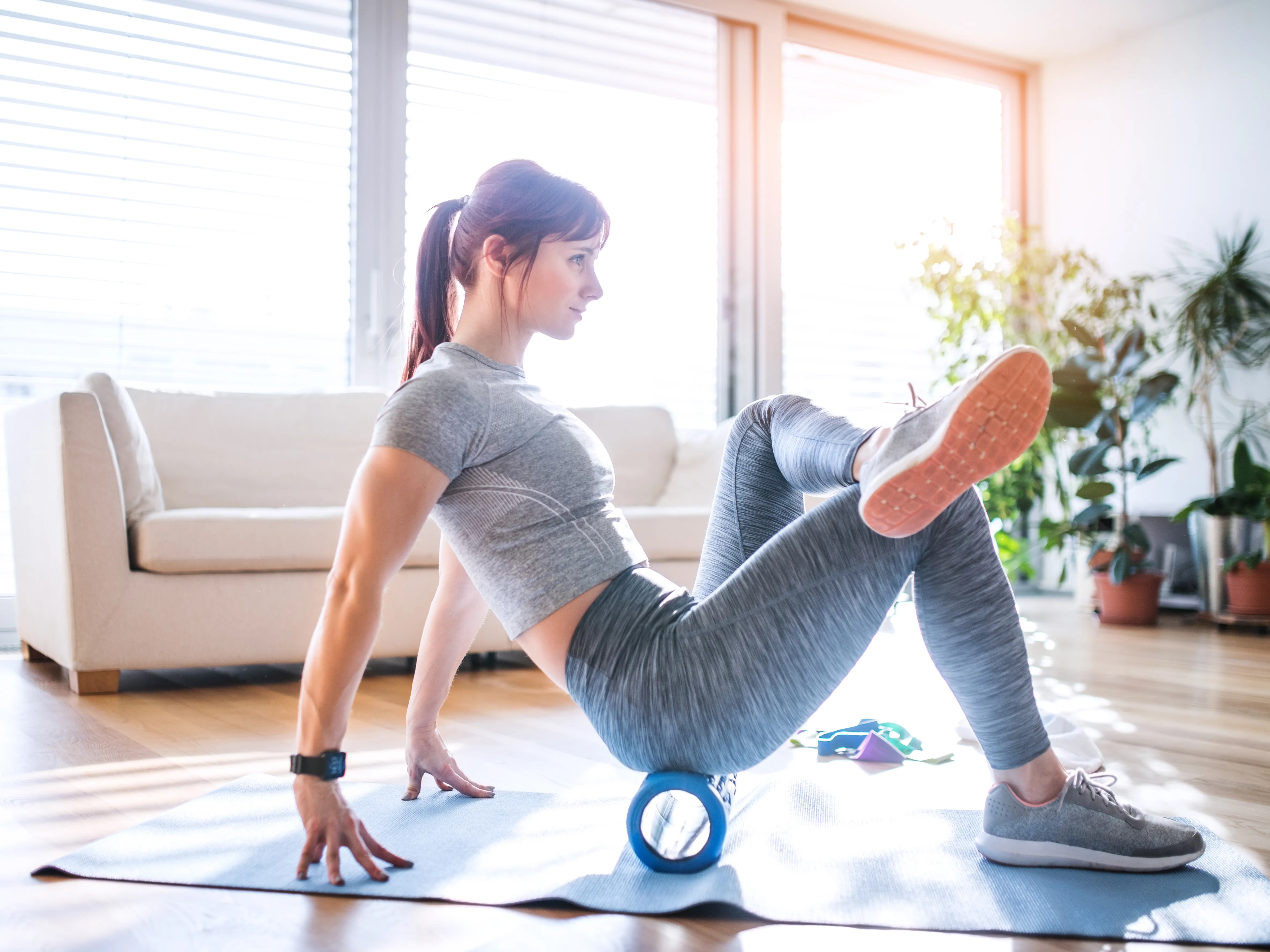
- Sit on the foam roller, placing it under one hamstring.
- Use your hands for support behind you, lifting your hips off the ground.
- Slowly roll from just below your glutes down to just above your knee.
- You can cross your other leg over the rolling leg to increase pressure.
Calves (Lower Legs)
- Sit with legs extended, placing the foam roller under one calf.
- Use your hands for support, lifting your hips.
- Slowly roll from your ankle to just below your knee.
- Rotate your leg side to side to hit different areas of the calf. To increase pressure, cross one leg over the other.
Glutes (Hips/Rear)
- Sit on the foam roller, leaning slightly to one side, placing the roller under one glute.
- Cross the leg of the glute you’re rolling over your other knee.
- Roll slowly, exploring different angles to find tender spots.
IT Band (Side of Thigh)
- Lie on your side, placing the foam roller just below your hip.
- Support yourself on your forearm and the foot of your other leg.
- Slowly roll down the side of your thigh from your hip to just above your knee. This can be intense, so proceed with caution.
Navigating the Roll: Tips and Common Mistakes to Avoid
To get the most out of your foam rolling sessions and prevent injury, keep these tips in mind and steer clear of common pitfalls:
Tips for Effective Foam Rolling
- Stay Hydrated: Water helps your muscles and fascia stay pliable.
- Consistency is Key: Regular, even short, sessions are more beneficial than infrequent long ones.
- Warm-Up First: Foam rolling is best done when your muscles are slightly warm, perhaps after a light cardio session.
- Listen to Your Body: Everyone’s pain tolerance and muscle tightness are different. Adjust pressure and duration as needed.
Common Mistakes to Avoid
- Rolling Too Fast: Speed rolling prevents muscles from fully engaging in the release process. Slow down to allow the pressure to work.
- Holding Your Breath: This indicates you might be in too much pain or are tensing up. Relax and breathe through the discomfort.
- Direct Pressure on Joints/Bones: Avoid rolling directly over knees, ankles, or hip bones. Focus on the muscle belly.
- Spending Too Long on One Spot: While holding on a tender spot is good, don’t stay there for more than 30-60 seconds. Move on and come back later if needed.
- Arching Your Lower Back: Especially when rolling your quads or hip flexors, keep your core engaged to protect your lumbar spine.
Seamless Integration: Weaving Foam Rolling into Your Fitness Routine
Foam rolling isn’t just a quick fix; it’s a versatile tool that can enhance every stage of your fitness journey.
- Pre-Workout Warm-up: A quick 5-10 minute session before your workout can help prepare your muscles for activity, improving blood flow and range of motion.
- Post-Workout Recovery: Immediately after your session, foam rolling can help kickstart the recovery process, reducing soreness and promoting muscle repair. Aim for 10-15 minutes.
- Rest Day Mobility: On non-training days, a longer foam rolling session can be dedicated to improving overall flexibility and addressing chronic tightness, keeping your muscles supple and ready for your next challenge.
Who Should (and Shouldn’t) Be Rolling Their Legs?
Foam rolling is generally safe and beneficial for most individuals, but there are exceptions.
Who Should Consider It:
- Athletes (Runners, Cyclists, Lifters): Essential for performance, recovery, and injury prevention.
- Desk Workers: Helps combat tightness from prolonged sitting, especially in hips and hamstrings.
- Anyone with Muscle Tightness/Soreness: A great self-care tool for everyday aches.
- Those Seeking Flexibility: Complements stretching routines effectively.
Who Should Be Cautious (or Consult a Doctor):
- Acute Injuries: If you have a fresh muscle tear, fracture, or severe bruising, avoid foam rolling that area.
- Certain Medical Conditions: Individuals with conditions like osteoporosis, varicose veins, or advanced heart disease should consult a healthcare professional before starting.
- Severe Pain: If foam rolling causes sharp, excruciating pain that doesn’t subside, stop immediately and seek medical advice.
Expert Insight: Choosing Your Ideal Leg Roller
“Finding the right foam roller for your legs is like choosing the perfect tool for a specific job,” says Dr. Elena Rodriguez, a leading Sports Physiotherapist. “Consider your muscle sensitivity, the intensity of massage you need, and your experience level. A roller that feels right will be one you actually use consistently.” For most, a versatile option like the TriggerPoint Grid, which offers a balance of firmness and texture, is an excellent starting point. If you’re a runner or cyclist with very tight hips and IT bands, a specialized roller like the RAD Helix might offer more targeted relief.
Frequently Asked Questions About Foam Rolling Your Legs
Q1: How often should I foam roll my legs?
A: For general maintenance and recovery, aiming for 10-15 minutes, 3-5 times a week, is a great start. If you have specific areas of tightness or are in a heavy training cycle, daily sessions might be beneficial.
Q2: Is a hard or soft foam roller better for legs?
A: It depends on your pain tolerance and muscle density. Beginners or those with very sensitive muscles often benefit from a softer roller (like those made with PE foam). More experienced individuals or those seeking deeper tissue work will typically prefer a firmer, high-density roller or one with texture.
Q3: Can foam rolling help with cellulite on legs?
A: While foam rolling can improve circulation and lymphatic drainage, which might temporarily make skin appear smoother, there’s no scientific evidence to suggest it’s a long-term solution for reducing cellulite.
Q4: What’s the difference between a foam roller and a massage gun for legs?
A: Both offer self-myofascial release, but they differ in approach. Foam rollers use sustained pressure and movement over a larger area. Massage guns use percussive therapy, delivering rapid, targeted pulses to a smaller, more specific area. Both have their place, often complementing each other for comprehensive muscle care.
Q5: Can I foam roll my legs every day?
A: Yes, for most people, foam rolling your legs daily is safe and can be very beneficial, especially if you have chronic tightness or are very active. Just be sure to listen to your body and avoid rolling over acutely injured or extremely painful areas.
Conclusion
The journey to happier, healthier legs is an ongoing one, and the best foam roller for legs can be an invaluable companion. By understanding the different types, mastering proper techniques, and integrating foam rolling into your routine, you’re not just addressing immediate soreness—you’re investing in long-term mobility, flexibility, and overall well-being. So grab your roller, tune into your body, and start exploring the incredible potential within your legs. They’ll thank you for every roll.